Leech Family
The Leech family of Gorse Hall were descendants of the Leechs of Chatsworth in Derbyshire. Members of the family moved to the Stalybridge and Dukinfield area around the 17th century as yeoman farmers. In 1748, the hamlet of Stalybridge had a population of only 120.
The Leech family became very wealthy mainly through the cotton industry. Cotton spinning powered by water came to Stalybridge in or about 1776, mainly because of the river Tame that runs through the centre of the town. The river provided the power to operate the machinery in the mills that made Stalybridge one of the main northern towns for cotton spinning.
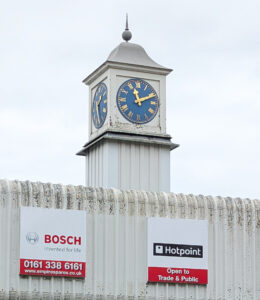
Most of John Leech's wealth was generated by his spinning mills. Around 1795, he joined a venture with others in the town (George Cheetham, Thomas Harrison, and John Lees) to build and run a cotton mill in Castle Street, nicknamed "The Bastille" (after the fall of the Bastille 6 years earlier). In 1801, they installed a steam engine (one of the first in the area), but in 1804, the mill was burnt down. The four then each decided to build new mills. In 1805, John Leech bought land next to the newly opened canal and had a mill built where the "Clock Tower Mill" now stands. To help keep his large workforce loyal, he had built for them what are known as tied houses. This ensured that workers were reluctant to join strikes or create trouble for fear of being sacked and losing their tenancy. In 1818, he became the first in the area to build a gas-making plant to light his factories (it is recorded that people would come from miles around to see his mill lit at night). The surplus gas produced, he would sell to other mill owners throughout the town. After he died in 1822 at the age of 68, the family business was taken over by his 21-year-old son, John, born in 1802.
This second John Leech had many successful business ventures from an early age. Later, to have the nickname "Ready money Jack". John married Jane Ashton in 1832. The Ashtons of Hyde were also wealthy cotton manufacturers. John bought land on the opposite side of Grosvenor Street, at the foot of Hob Hill, where he built a new mill. Part of this mill was built to a height of 7 stories, making it the tallest in the area. Asked why he had the mill built to this height, he replied: "There's no ground rent to pay up there".
John Leech bought the Gorse Hall estate from the Astley family in 1835. Using stone from nearby quarries, he built a sizeable mansion, which he called Gorse Hall. The cottage already built on the estate was to become known as Old Gorse Hall (recent research shows it was inhabited from around 1530), making it one of the earliest stone buildings in the area.
John and Jane had eight children, two having died in infancy. Helen and Elizabeth later married two brothers, Rupert and Walter Potter. The Potter family ran a successful calico printing business in Dinting, Glossop, Derbyshire, five miles from Stalybridge. Helen and Rupert married in 1863 at the Unitarian Chapel in Hyde, Cheshire.

During John Leech's ownership of Gorse Hall, improvements and alterations were made to enhance the estate and make it one of the finest in the area. The original farm stables were extended and fitted out with fine wooden-panelled horse stalls and wooden cladding (it is said the interior of the stables was palatial), with living quarters above for coachmen and staff. The finely laid-out gardens, edged by rhododendrons and hawthorn, incorporated greenhouses, a summer house and a fernery. The orchard and vinery made these gardens both self-sufficient and ornamental. The impressive water feature by one of the Brougham horse-drawn coaches that John Leech owned. On the estate was a footpath used by his mill workers who walked from Dukinfield and Newton. This footpath ran across the lower part of the coach road leading to the mill to stop any workers from trespassing onto the estate, and he had a passageway and tunnel built that ran under the coach road, three feet wide and five feet deep. This passage ran about 100 yards up the hillside, making sure that no one could be seen on his estate.

Another of John Leech's ventures was the building of seagoing steamships to import and export cotton, tea or any other commodity that he could trade on the Manchester Exchange. These ships were built at a shipyard in Biddeford, Devon, and were based in Manchester and Liverpool. One ship was named ‘The Jane Leech’. Goods were transported by barge along the canal straight to his factories in Stalybridge.
John Leech, born in 1802, died in 1860 at Gorse Hall and is buried in the family tomb at Old Chapel Dukinfield.
John’s heir, born in 1835 and his brother William continued to expand the business until 1872, when there seem to be no major structural alterations to the Grosvenor St. mills. The mills were bought by the Lancashire Cotton Corporation in 1929, and most of the buildings were demolished in 1934. A small portion of the ‘clock tower’ mill is still in use today. (See addendum at the bottom of the page).
By 1955, all connection with the cotton industry seems to have ceased.
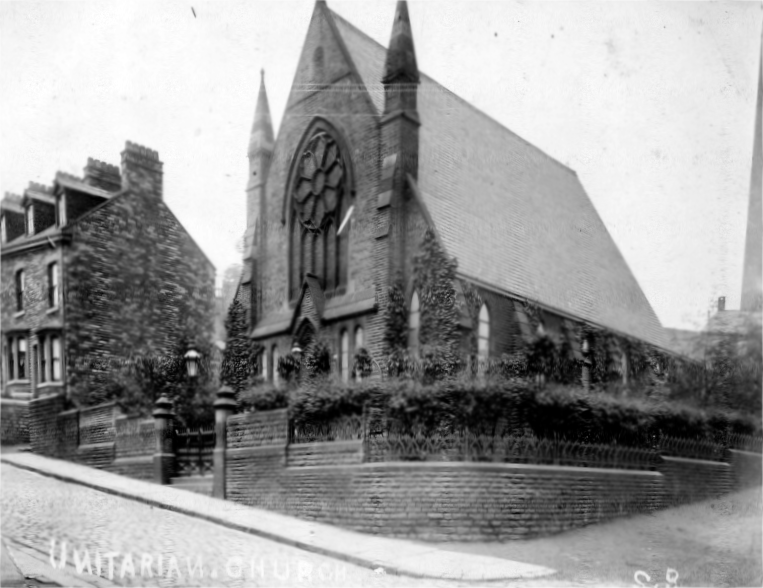
John and his brother William generously gave a plot of land at the corner of Canal St. and Brierly St., at the edge of the Gorse Hall estate, along with a £200 donation to the building fund of the Unitarian church in Stalybridge. Other donations from Mrs Leech and family members, including Rupert Potter, were given to the fund. Their former home, Hob Hill House, was to be used as a Sunday School. The church foundation stone was laid by Mrs Jane Leech on Whit Friday, 1869, on land now known as Forester Drive. Jane lived on at the mansion until she died in 1884. A stained-glass window was installed in the school as a memorial to Mrs Leech.
For the first three years of their marriage, Helen and Rupert lived in Upper Harley Street, London, then moved to 2 Bolton Gardens, Kensington. It was here that Helen Beatrix Potter was born on July 28th 1886. She was to become the famous children’s author of Peter Rabbit stories. After the death of Jane Leech, Gorse Hall was left unoccupied until it was bought by William Storrs, a wealthy local builder, in 1891, and given as a wedding gift to his son George Harry Storrs. It was here that George Harry was brutally murdered in 1909.
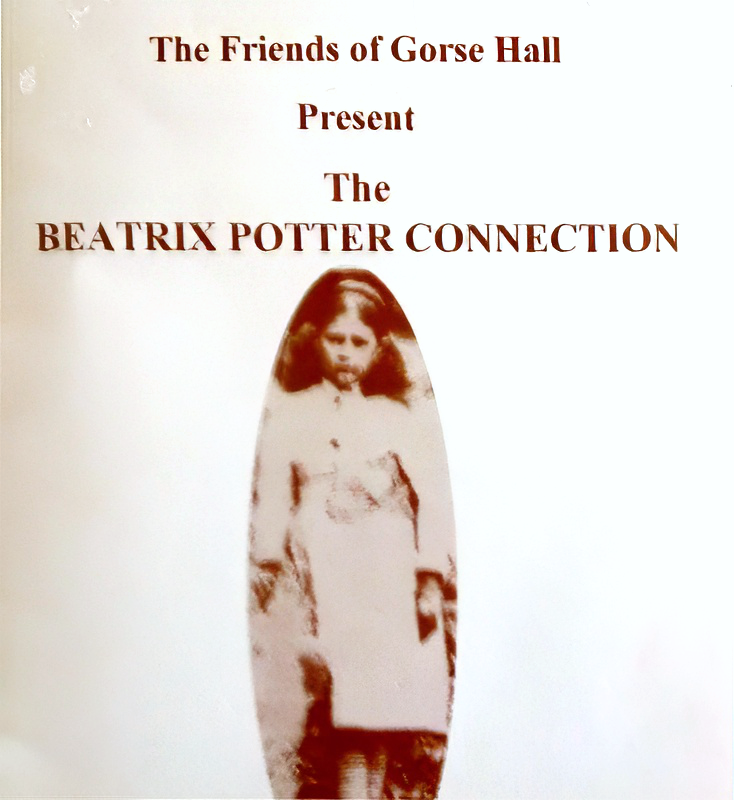
Bazaar programme 1900
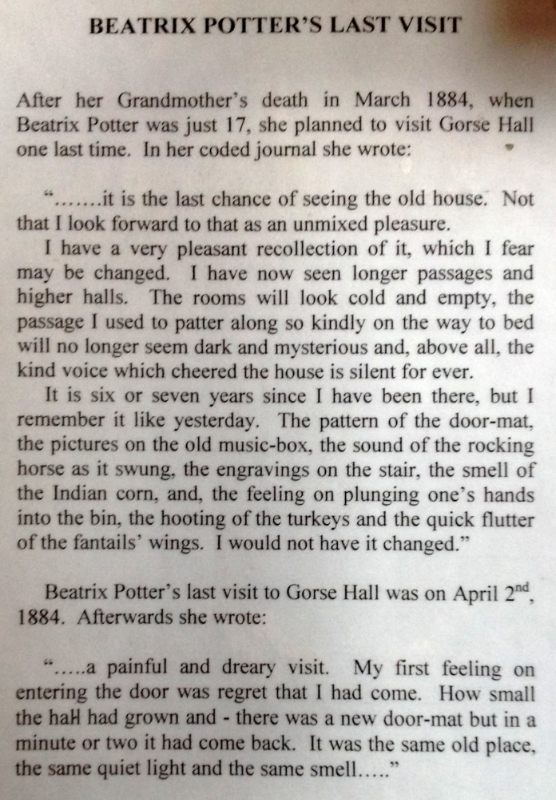
Beatrix Potter's last visit to Gorse Hall

Addendum: A part of Clock Tower Mill on Leech Street is currently (in 2026) occupied by the business "Empire Spares and Electricals", above which the original clock can still be seen.